Choosing the right e-commerce platform is one of the most important technology decisions for any online business. The dilemma between SaaS (Software as a Service) solutions and Magento 2 ultimately A good starting point is to create a small checklist of your current business activities. This can significantly help you choose the most suitable solution for your company.
In this article, you will find information about which businesses can benefit most from SaaS solutions and which are better suited for Magento 2, as well as the advantages each option can bring to your business.
SaaS or Magento 2 – Which is better for your Online Store?
Choosing between SaaS and Magento 2 is one of the most important decisions when building an online store. It affects not only the implementation cost but also the growth potential, scalability, and flexibility of your e-commerce platform.
Search terms such as “SaaS vs Magento 2,” “Magento 2 or SaaS,” and “best e-commerce platform” are increasingly popular among online store owners. This reflects growing technological awareness and the need to build scalable businesses.
It is worth noting that when we refer to Magento 2, we mean Magento 2 Open Source, which is open-source software that allows you to fully customize and edit the code according to your business requirements.
What SaaS solutions are available on the Market?
The most commonly chosen subscription-based solutions include Shopify, BigCommerce, Shoper, and IdoSell.
Shopify stands out for its ease of implementation and extensive app ecosystem. BigCommerce is valued for its advanced sales features available out of the box, while Shoper and IdoSell are popular in the Polish market due to their comprehensive technical support and integrations with local payment and delivery systems.
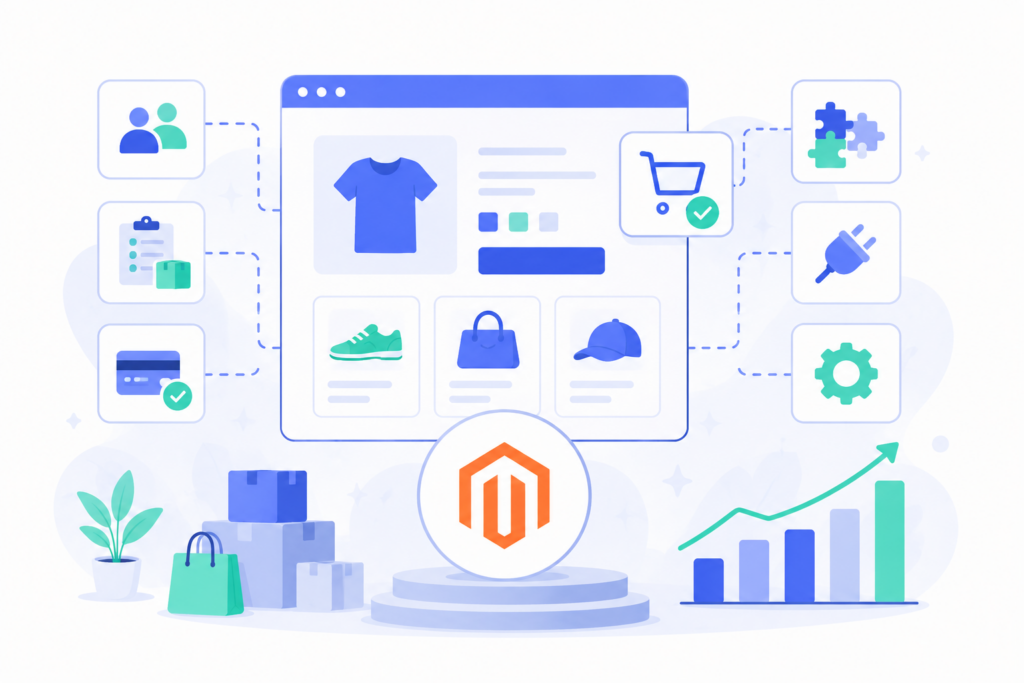
Unlike Magento, SaaS platforms do not require you to manage server infrastructure or system updates on your own, resulting in a lower entry barrier and faster implementation times.
What Is SaaS in E-commerce?
The SaaS (Software as a Service) model involves using a ready-made e-commerce platform through a subscription plan. The provider is responsible for infrastructure, hosting, and updates.
Advantages of SaaS:
- Fast online store deployment
- No need to manage servers
- Low initial costs
- Easy to use
Disadvantages of SaaS:
- Limited flexibility
- Dependence on the provider
- Additional costs for extensions and add-ons
- Difficulties scaling large and complex projects
The SaaS model is often chosen by small and medium-sized businesses that want to start selling online quickly.
Magento 2 – An advanced e-commerce platform
Magento 2 is a powerful open-source platform that provides full control over your online store. It is designed for companies planning long-term growth and requiring technological flexibility.
Advantages of Magento 2:
- Complete customization capabilities
- Advanced e-commerce features
- High scalability
- No technological limitations
- Easy integration with WMS, PIM, and other systems via APIs
- Integration with ERP and CRM systems
Disadvantages of Magento 2:
- Higher implementation costs
- Longer project delivery times
- Requires developer support
If you are planning a Magento 2 implementation, it is worth working with experienced specialists such as Mediaflex, who deliver advanced e-commerce projects and system migrations.
SaaS vs Magento 2 – comparing key aspects
Store Flexibility and Growth
Magento 2 is the clear winner in terms of flexibility. Unlike SaaS platforms, it allows the creation of custom functionalities tailored to your specific business model.
Costs – SaaS vs Magento 2
SaaS offers a low entry threshold but generates ongoing subscription fees and charges for additional features.
Magento 2 requires a larger initial investment; however, in the long term, it can be more cost-effective, especially for businesses operating at scale.
Scalability and Performance
Magento 2 is designed for large online stores. It can efficiently handle extensive product catalogs and high traffic volumes.
SaaS platforms may become limiting as projects become more advanced and complex.
SEO and Search Engine Optimization
Magento 2 provides significantly greater SEO optimization capabilities than most SaaS platforms. You can fully control:
- URL structure
- Meta tags
- Website speed
- Content management
This is a crucial factor for businesses investing in organic search visibility and long-term SEO strategies.
Migrating from SaaS to Magento 2 – when is it worth it?
Many businesses start with a SaaS solution and later migrate to Magento 2 as they grow.
Migration allows companies to expand system capabilities and improve overall performance. However, the process must be carefully planned, especially regarding SEO preservation and maintaining website traffic.
A detailed migration guide can be found at the link below.
Magento 2 vs Other E-commerce Platforms
Magento 2 is often compared with other platforms, such as PrestaShop. The right choice depends on the scale of the project and specific business requirements.
If you are considering the differences between these solutions, be sure to review a detailed comparison before making a decision.
SaaS vs Magento 2 – summary
SaaS is a good choice if:
- You are just starting in e-commerce
- You want to launch your store quickly
- You have a limited budget
- You do not need advanced features
Magento 2 is the right choice if:
- You operate a large online store
- You require custom solutions
- You plan international expansion
- SEO and scalability are important to your business
The SaaS vs Magento 2 comparison shows that there is no one-size-fits-all solution.
SaaS offers simplicity and rapid deployment, while Magento 2 provides flexibility and long-term growth opportunities. If you are thinking strategically about the future of your e-commerce business, Magento 2 offers significantly greater potential for building a sustainable competitive advantage.
